
Unexpected Box Office Flops That Became Classics
The narratives behind films often reveal unexpected twists, including last-minute script alterations, roles that almost went to different actors, and scenes that were ultimately cut. Among the most surprising revelations is that many films we now cherish as timeless classics initially flopped at the box office. Below, we explore 17 iconic films that were shocking box office failures.
1. Fight Club (1999)
Upon its release, “Fight Club” faced significant challenges. The marketing campaign struggled to articulate its themes, opting instead for dark humor and stylish visuals that didn’t clarify the film’s deeper message. Critics were divided, and audiences were hesitant to embrace it, resulting in disappointing box office returns. However, its commentary on consumerism, identity, and anger resonated with those who did see it. The film found its audience on DVD, where it became a cultural phenomenon, bolstered by a wealth of special features and the era’s booming home video market.
2. Citizen Kane (1941)
It’s astonishing that “Citizen Kane,” often hailed as the greatest film ever made, initially struggled at the box office. While it garnered critical acclaim, its narrative—based on the life of newspaper mogul William Randolph Hearst—provoked Hearst’s ire, leading him to suppress advertising and media coverage. Many theaters avoided screening it out of fear of his influence. It wasn’t until its re-release in 1956, championed by critics in both the U.S. and France, that audiences began to recognize its brilliance, solidifying its status in film history.
3. Blade Runner (1982)
Despite featuring Harrison Ford, “Blade Runner,” a groundbreaking sci-fi film, did not resonate with audiences at first. Released alongside the blockbuster “E.T.,” its slower, more introspective style made it a tough sell. Mixed reviews and studio-imposed changes, such as a voiceover and an altered ending, contributed to its underwhelming box office performance. However, as director’s cuts and re-releases emerged, the film’s intended vision shone through, and it eventually gained recognition as a pivotal work in the sci-fi genre.
4. The Nightmare Before Christmas (1993)
Initially, “The Nightmare Before Christmas,” produced by Tim Burton and directed by Henry Selick, performed modestly with a $50 million box office total. Disney’s decision to release it under the Touchstone label stemmed from concerns about its darker themes. While critics praised its creativity, it did not immediately capture widespread attention. Over time, however, the film developed a robust cult following, aided by VHS and DVD releases, as well as its annual Halloween airings on television. Disney later embraced its popularity, incorporating it into Halloween celebrations at their theme parks.
5. The Iron Giant (1999)
“The Iron Giant” struggled to attract viewers despite receiving positive reviews. Warner Bros. faced internal challenges that hindered its marketing efforts, resulting in low visibility among family audiences. Released in a crowded year for animated films, it was overshadowed by blockbusters like “Tarzan” and “Toy Story 2.” However, through television airings and home video sales, it gradually built a devoted following and is now celebrated as a modern animated classic.
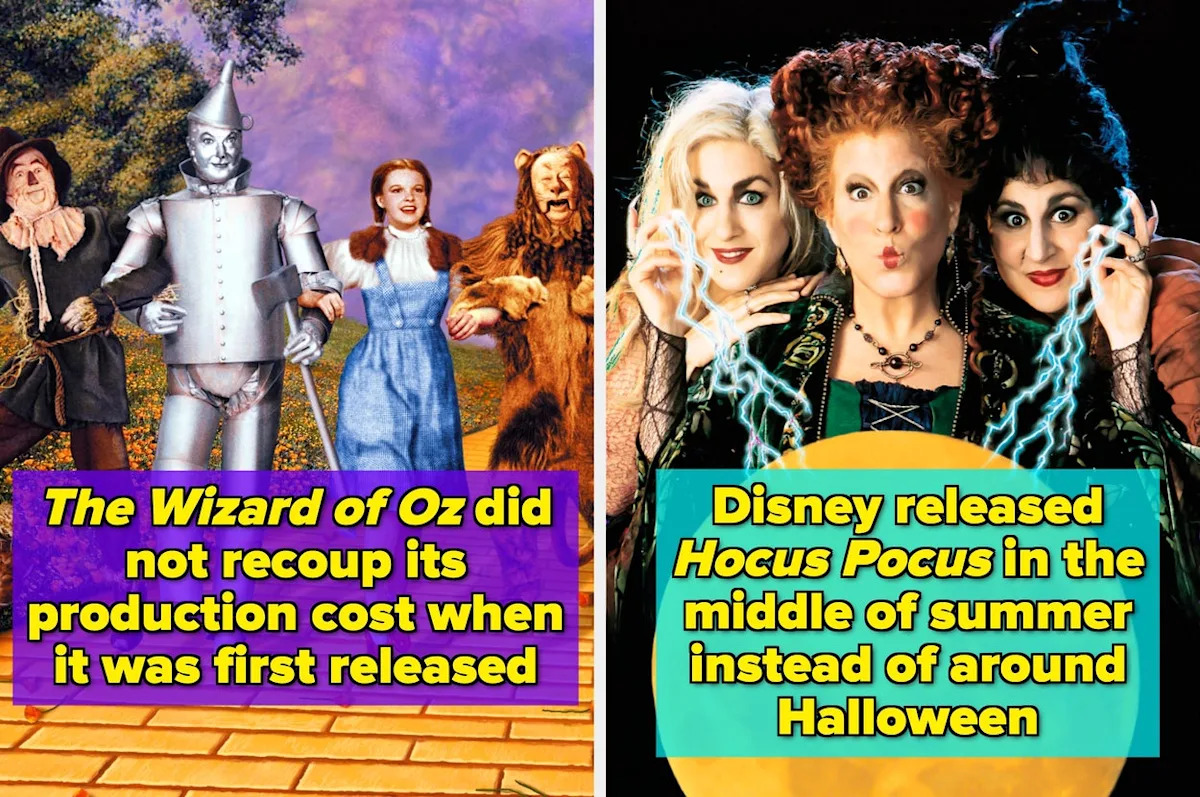
6. Hocus Pocus (1993)
Despite its current status as a Halloween favorite, “Hocus Pocus” initially underperformed at the box office. Disney’s choice to release it during the summer rather than the Halloween season diminished its appeal to families. Competing against major summer hits like “Jurassic Park” further hurt its ticket sales. However, as cable networks began airing it every October, it transformed into a beloved holiday staple, eventually leading to a sequel.
7. Dazed and Confused (1993)
“Dazed and Confused” aimed to replicate the nostalgic success of “American Graffiti,” but the studio struggled with its marketing. The film’s plot, which loosely follows a group of teens on the last day of school in 1976, lacked a clear hook, leading to a subdued theatrical release. Its true success emerged post-theatrically, as it gained traction through home video sales and word-of-mouth, eventually becoming a defining coming-of-age film of the 1990s.
8. The Shawshank Redemption (1994)
Despite receiving critical acclaim, “The Shawshank Redemption” faced poor box office performance. Its title was seen as unappealing, and its release coincided with major films like “Forrest Gump” and “Pulp Fiction,” which overshadowed it. The film’s fortunes changed significantly when it began airing on cable television, particularly on TNT, allowing new audiences to discover and appreciate it over the years.
9. The Princess Bride (1987)
It’s hard to believe that “The Princess Bride,” now regarded as a classic, had a rocky start. The studio struggled to define its genre, unsure whether to market it as a romance, comedy, or fantasy adventure. This lack of clarity extended to its target audience, leading to a poorly received trailer. However, through home video and cable broadcasts, the film’s witty dialogue and endearing characters found a receptive audience, solidifying its status as a beloved classic.
10. It’s a Wonderful Life (1946)
Though “It’s a Wonderful Life” received positive reviews and multiple Oscar nominations, it failed to make a profit upon release. Audiences were seeking lighter fare in the post-WWII era, which hurt its box office. The film faded into obscurity until a legal oversight in 1974 allowed it to enter the public domain, leading to frequent television broadcasts during the holiday season. This exposure helped it gain a place in the hearts of viewers, transforming it into a cherished Christmas classic.
11. Donnie Darko (2001)
“Donnie Darko” featured a complex mix of psychological thriller, sci-fi, and teen drama, which made it challenging to market. Released shortly after the 9/11 attacks, it struggled to find an audience eager for lighter entertainment. Its true impact emerged through DVD releases and midnight screenings, as viewers began to unravel its intricate themes of time travel and mental health, ultimately leading to its status as a cult classic.
12. Labyrinth (1986)
Directed by Jim Henson and featuring notable talents like David Bowie, “Labyrinth” faced stiff competition from larger blockbusters upon its release. Coupled with negative critical reviews, its box office performance suffered. However, following its release on home video, it gained a dedicated following and is now recognized as a cult classic, with a sequel currently in development.
13. Josie and the Pussycats (2001)
“Josie and the Pussycats” approached pop music and marketing with a satirical lens, which may have confused viewers expecting a straightforward teen comedy. Released during a busy year for youth-oriented films, it struggled to stand out. Its DVD release allowed audiences to appreciate its clever commentary on consumer culture, and over time, it developed a devoted fan base.
14. Willy Wonka and the Chocolate Factory (1971)
“Willy Wonka and the Chocolate Factory” had a modest box office performance and received mixed critical reviews despite its basis in a beloved book series. It seemed destined for obscurity until television networks began airing it regularly, particularly during holidays. These broadcasts, along with VHS releases, introduced the film to new audiences, ultimately solidifying its status as a cherished classic.
15. The Big Lebowski (1998)
The Coen brothers’ “The Big Lebowski” combined elements of comedy and crime in a surreal fashion that made it difficult to market effectively. As a result, its advertising failed to capture the film’s unique essence, leading to a lackluster reception. However, through home video and frequent cable airings, it garnered a cult following, with fans affectionately calling themselves “achievers.”
16. The Shining (1980)
While not a commercial flop, “The Shining” was only a moderate success upon release. Directed by Stanley Kubrick and based on Stephen King’s novel, it faced criticism for its deviations from the source material. The film’s psychological horror elements also polarized audiences expecting traditional horror. Over the years, however, it has been reassessed, earning recognition as a landmark film in the horror genre and a defining work of Kubrick’s career.
17. The Wizard of Oz (1939)
When “The Wizard of Oz” premiered, it struggled to recoup its substantial production costs, only achieving box office success during its 1949 re-release. Its status as a cultural icon emerged in the late 1950s when it began airing on television. These annual airings created a tradition for families, introducing the film to new generations and solidifying its place as one of the most beloved films in cinematic history.


